A well-designed teacher planner is the command centre for effective classroom management and instruction. Beyond scheduling, today’s planning tools help teachers track student progress, manage responsibilities and maintain work-life balance.
Below, we cover essential elements of a teacher planner that help improve productivity and reduce administrative stress, allowing you to focus on teaching and supporting students.
Essential Sections Every Teacher Planner Should Include
High-quality teacher planners combine several core components that support different aspects of educational practice. While personalisation matters, certain foundational elements are valuable across all teaching contexts.
1. Term and Academic Year Calendars
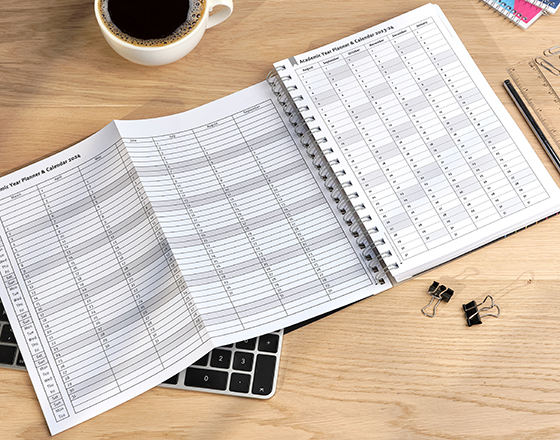
Annual and term calendars provide a valuable perspective for pacing curriculum delivery and managing key academic milestones. These should include term dates and breaks, staff development days, assessment periods, report deadlines, school events, and department meetings.
This information in a single overview prevents scheduling conflicts and helps balance workload throughout the year. Student planners often mirror these calendars, creating consistency across your classroom organisation system.
2. Timetable Layouts and Period Planning
Your weekly teaching schedule forms the backbone of daily planning. Practical timetable sections include space for different class groups, period-by-period breakdowns, room allocations, and areas for noting recurring duties.
This section should provide enough space to note specific lesson objectives and key activities for each period, creating a valuable reference when moving between different groups throughout the day.
3. Detailed Lesson Planning Space
While digital platforms may house comprehensive plans, your physical planner should include condensed planning spaces that capture essential elements:
- Learning objectives and success criteria
- Key activities with approximate timing
- Differentiation strategies for mixed-ability groups
- Resources needed for delivery
- Homework assignments and follow-up tasks
These planning spaces should balance detail with practicality. Some teachers find that exercise books can complement these sections by providing additional space for more detailed plans when needed.
4. Assessment and Marking Trackers
Monitoring student progress requires systematic record-keeping. Include tracking systems for formative assessments, summative tests, assignment completion, participation indicators, and target grades.
These systems should accommodate different assessment types and provide space for noting specific areas of strength or concern. Effective trackers allow you to monitor trends over time rather than just recording isolated assessment points.
How Can Your Planner Support Student Management?
Beyond curriculum delivery, teacher planners should also facilitate effective student management systems.
Attendance and Behaviour Monitoring
Regular attendance patterns directly impact student achievement. Include sections for attendance recording, lateness tracking, and absence patterns. This information provides context for understanding performance and informs parent communications. This data and academic information give you a more complete picture of each student’s educational experience.
Student Information and Differentiation Notes
Quality teaching requires understanding your students as individuals. Create space for recording special educational needs, EAL support strategies, extension approaches, and relevant medical information. These notes help personalise your approach and show a commitment to inclusive practice. Study and revision packs can complement these differentiation notes with structured support materials for various learning needs.
Parent Communication Records
Keeping clear records of parent interactions is key for continuity in your communication strategy:
- Contact details for quick reference
- Meeting dates and discussion summaries
- Parental concerns and follow-up actions
- Positive communications and celebrations
- Documentation of interventions and outcomes
What Professional Development Elements Should You Include?
Teacher planners should support your growth as an educator, not just daily classroom management.
Goal Setting and Reflection Spaces
Include areas for setting teaching goals, reflecting on lesson effectiveness, noting successful strategies, identifying professional learning needs, and planning classroom interventions.
Regular reflection transforms teaching from routine delivery to iterative improvement. These sections capture insights that might otherwise be lost in the busy flow of academic life.
Meeting Notes and Action Points
Create a dedicated space for staff and department meeting notes, learning community discussions, parent conferences, and administrative briefings. Consolidating meeting notes ensures action items remain visible and integrated with your overall planning rather than isolated on separate documents.
How to Customise Your Planner for Maximum Effectiveness
The most effective teacher planners reflect individual professional needs and contexts.
Subject-Specific Adaptations
Different curriculum areas benefit from specialised planning approaches. Mathematics teachers might include formula references and misconception notes. English teachers often benefit from reading, tracking, and vocabulary development sections. Science educators may need experiment preparation checklists.
Year Group Considerations
Teaching strategies vary across different age groups. Primary teachers may need integrated subject planning with cross-curricular connections. Key Stage 3 teachers benefit from knowledge progression tracking. GCSE and A-Level teachers require specification mapping and exam preparation tracking.
Implementing a Sustainable Planning System With Penstripe’s Teacher Planners
At Penstripe, we’ve designed our teacher planners specifically to support effective planning systems that work in real classroom environments. Our planners aren’t just organisational tools—they’re productivity partners crafted with the unique needs of UK educators in mind.
Penstripe Teacher Planner Features
Our teacher planners come with thoughtfully designed features to support your teaching practice:
- Flexible formats: Choose from B5 or A4 sizes to suit your preference for writing space or portability
- Binding choices: Available in both spiral-bound and loose-leaf formats for different usage styles
- Customisation capabilities: Add your school logo, colours, and specific content requirements to create a truly bespoke planning solution
We understand that every teacher’s planning needs are unique. That’s why we offer both dated planners for the current academic year and undated options for maximum flexibility in your planning approach.
Contact Penstripe
Ready to transform your planning approach? Contact us today to discuss custom planner options for your school’s specific teaching requirements.


